Project report: From probation to integration in Armenia
SGS 2025 Grantee: Centre for legal Initiatives, Armenia
Project: Pathways to Reintegration: Empowering through Social Inclusion for a Sustainable Future
Project Aims and Approach
The project was designed to support individuals on probation in their social integration and active participation in community life. Acknowledging that reintegration is a complex and long-term process influenced by legal restrictions, social stigma, limited access to social services, and fragile family relationships, the project aimed to strengthen participants’ personal, social, legal, and employability capacities while fostering cooperation between state institutions, civil society organisations, and local communities.
To enhance the social inclusion of people on probation, the project focused on equipping participants with practical skills, increasing their awareness of their rights and available state social and legal services, and strengthening family and community support systems. Particular emphasis was placed on creating a safe, non-judgmental environment in which participants could openly share personal experiences and challenges, receive professional guidance, and learn from one another’s experiences of community engagement and integration. Additionally, the project sought to contribute to institutional learning by strengthening collaboration with the Probation Service and other community actors involved in the reintegration process.
Activities
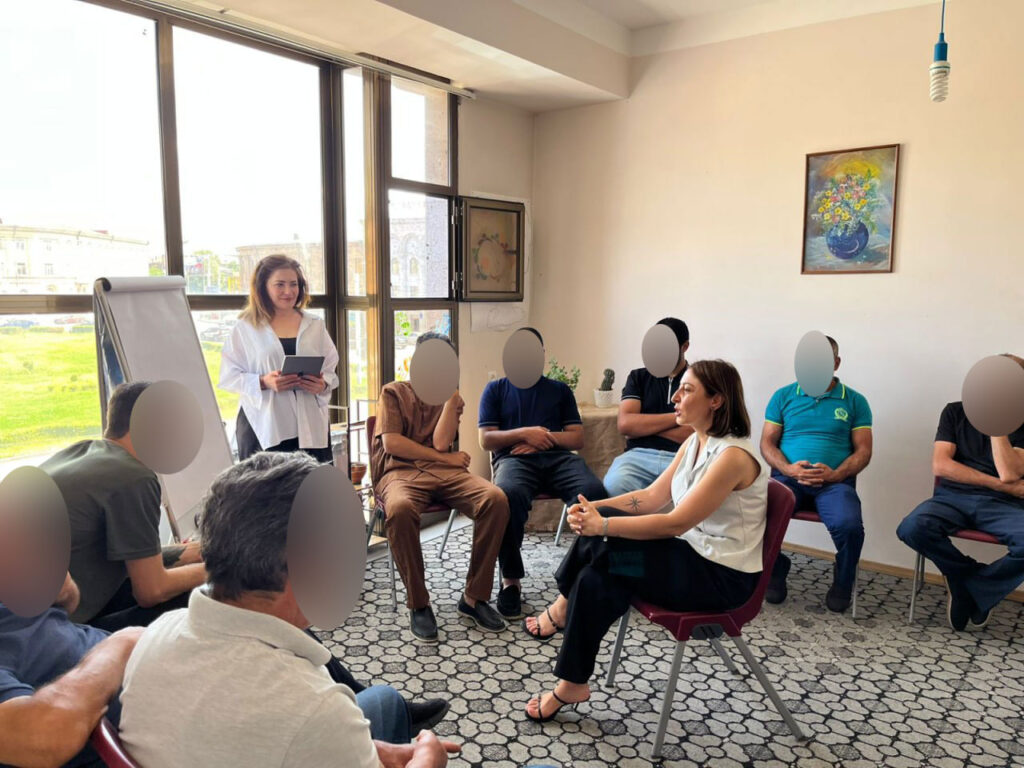
16 training sessions were organised focusing on the development of social skills and well-being, personal growth and employment skills, legal awareness and rights protection, and social reintegration skills. The sessions engaged 40 participants, including 36 individuals on probation and 4 of their family members, representing diverse age groups, educational backgrounds, and work experiences.
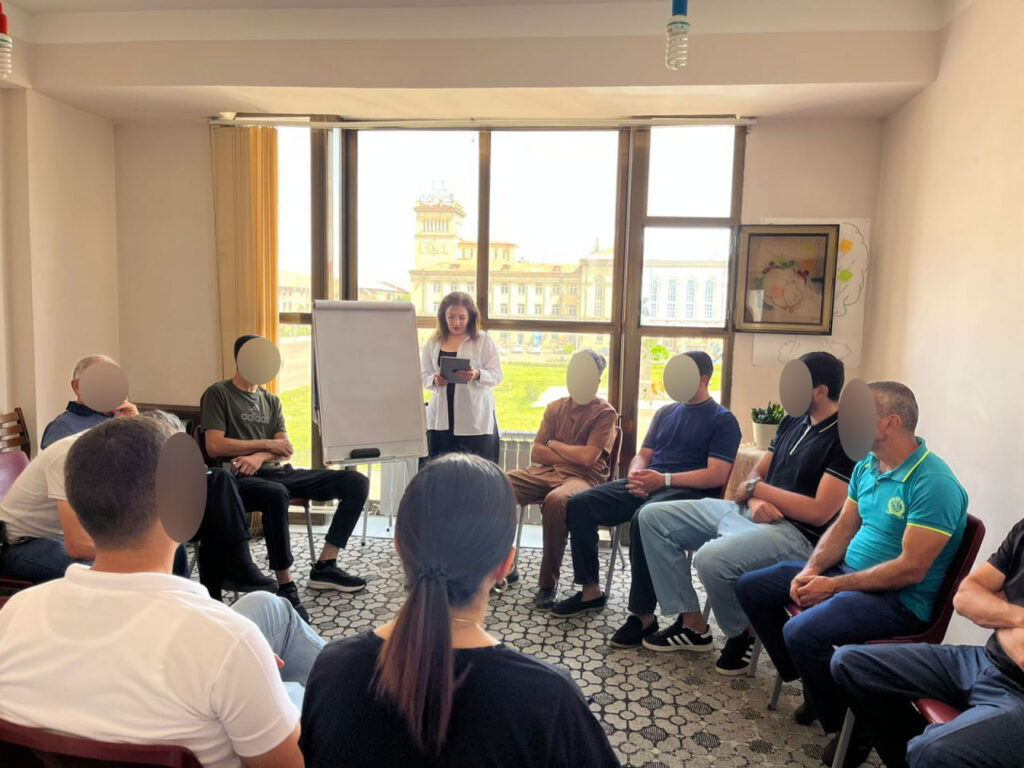
The training covered communication and interpersonal skills, self-awareness and personal potential development, emotional well-being, stress and emotion management, goal setting, time management, CV preparation, job interview techniques, and job-seeking strategies. Participants were also introduced to their legal status as probation beneficiaries, their rights and responsibilities, applicable legal limitations, and available state support programmes and application procedures.
To strengthen institutional linkages, one session was held at the Shirak Regional Office of the Human Rights Defender of Armenia, where participants were introduced to complaint submission procedures and legal protection mechanisms. Another session took place at the Gyumri Regional Centre of the Unified Social Service of the Ministry of Labor and Social Affairs of Armenia, focusing on state social programmes, eligibility criteria, and upcoming employment-related reforms. These visits revealed significant gaps in participants’ awareness of available services and procedures, while also enabling tailored guidance and practical problem-solving support.
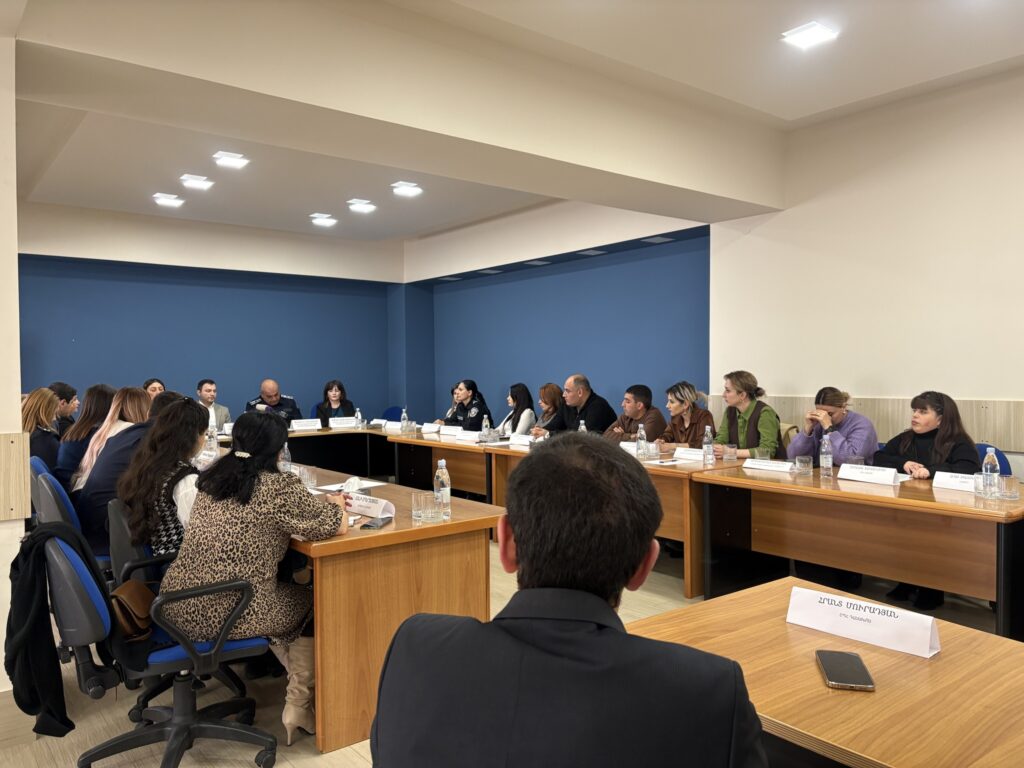
The project concluded with a regional conference entitled “Reintegration Challenges and Perspectives of Those on Probation,” which brought together representatives of state agencies, local institutions, civil society organisations, and youth and academic sectors. The conference served as a platform to present project outcomes, discuss systemic challenges, and promote constructive dialogue around reintegration opportunities.
Key Achievements and Outcomes
The project directly benefited 40 individuals, representing approximately 5% of the probation beneficiaries registered with the Shirak Regional Office of the Probation Service. Participants reported increased self-confidence, improved communication and interpersonal skills, enhanced awareness of their rights and legal status, a better understanding of available social and legal services, and stronger motivation to pursue employment opportunities and active community engagement.
One participant noted: “For the first time, I felt that my past did not define my future. These sessions helped me see my strengths and understand that I still have opportunities.”
The involvement of family members emerged as a significant achievement of the project, helping them address stigma, emotional stress, and social isolation, while also enabling them to view the potential of relatives with criminal records from a more positive and supportive perspective. Strengthened family bonds were recognised as a critical factor for sustainable and long-term reintegration.
Practical outcomes of the project included successful job matching between participants, the restoration of social benefits for two participants following on-site consultations, and the formation of a peer-support environment similar to a self-help group, where participants could share experiences, encourage one another, and jointly address challenges.
As another participant put it: “Knowing that others face the same difficulties – and that we can help each other – made me feel less alone and more hopeful.”
The project also strengthened cooperation between the Center for Legal Initiatives NGO and the Shirak Regional Office of the Probation Service through regular coordination meetings and consultations. This collaboration contributed to renewed attention to the importance of social inclusion and re-socialisation of people in conflict with the law, alongside the Probation Service’s supervisory and control functions.
Lessons Learned and Broader Impact
A key lesson learned was the low level of awareness among probation beneficiaries regarding available social, legal, and employment services, largely resulting from long-term stigma, social exclusion, and institutionalisation within their local communities. This finding highlighted the need for continuous awareness-raising, accessible information channels, and sustained support focused on self-development, emotional stability, and well-being.
The project also demonstrated that effective reintegration requires balanced probation practices, in which control and supervision mechanisms do not overshadow rehabilitation and social inclusion objectives. At the institutional level, the project revealed structural gaps, including the absence of dedicated resocialisation units within regional offices of the Probation Service. In response, recommendations were made to assign at least one staff member in each regional office with primary responsibility for resocialisation, with civil society organisations providing methodological and professional support.
In addition, the training modules developed during the project were shared with the Shirak Regional Office of the Probation Service, enabling wider replication of the approach and contributing to long-term and sustainable impact.
Overall, the project confirmed that successful social inclusion and reintegration are possible only through sustained collaboration among individuals affected by the law, their families, state and community institutions, and civil society organisations. By combining individual empowerment with institutional dialogue, the project contributed to reducing the risk of reoffending, strengthening social cohesion, and fostering safer and more inclusive communities.
Contact
Nare Hovhannisyan,
President and Project Coordinator
Centre for Legal initiatives NGO
Yerevan, Armenia


