Project report: Sustaining Health and Empowerment: Women Living with HIV Leading Change in EECA
SGS 2025 Grantee: Eurasian Women’s Network on AIDS (EWNA)
Project: Improved health outcomes for women living with HIV through community-led education, support and referral aimed at preventing breast and cervical cancer
Across Eastern Europe and Central Asia (EECA), women living with HIV face multiple barriers to accessing sexual and reproductive health (SRH) services. Stigma, discrimination, and limited availability of HIV-friendly healthcare often leave women without critical information or support. Women living with HIV are at significantly higher risk of cervical cancer. Early detection through regular screening is essential to prevention. However, many of them face low screening rates. Health systems often fail to integrate HIV care with cervical cancer prevention, creating additional barriers to timely screening and treatment. Late diagnosis has severe consequences, as cervical cancer detected at an advanced stage is harder to treat and reduces survival. To address this, the Eurasian Women’s Network on AIDS (EWNA), with support from The BEARR Trust Small Grants Scheme, launched a community-led initiative to improve health outcomes, focusing on cervical and breast cancer prevention, screening, and HPV vaccination. Community-led initiatives are critical in raising awareness, providing practical support, and facilitating access to screening services. Empowering women to lead these initiatives ensures they can navigate barriers, advocate for their health, and improve outcomes across the region.
Aims and approach
The project aimed to empower women living with HIV through community mobilisation, education, and practical support, strengthening their capacity to make informed health decisions. EWNA’s approach emphasised cross-country collaboration and peer-led leadership, working with trusted local organisations in Moldova, Ukraine, and Uzbekistan. These partners included Charitable Organisation “Positive Women” and its regional affiliates (Ukraine), Ishonch va Hayot NGO (Uzbekistan), and the Association for Creative Development of Personality (Moldova). Their long-standing relationships with local communities ensured that activities were responsive, culturally appropriate, and led by women themselves.
Community-led activities across borders
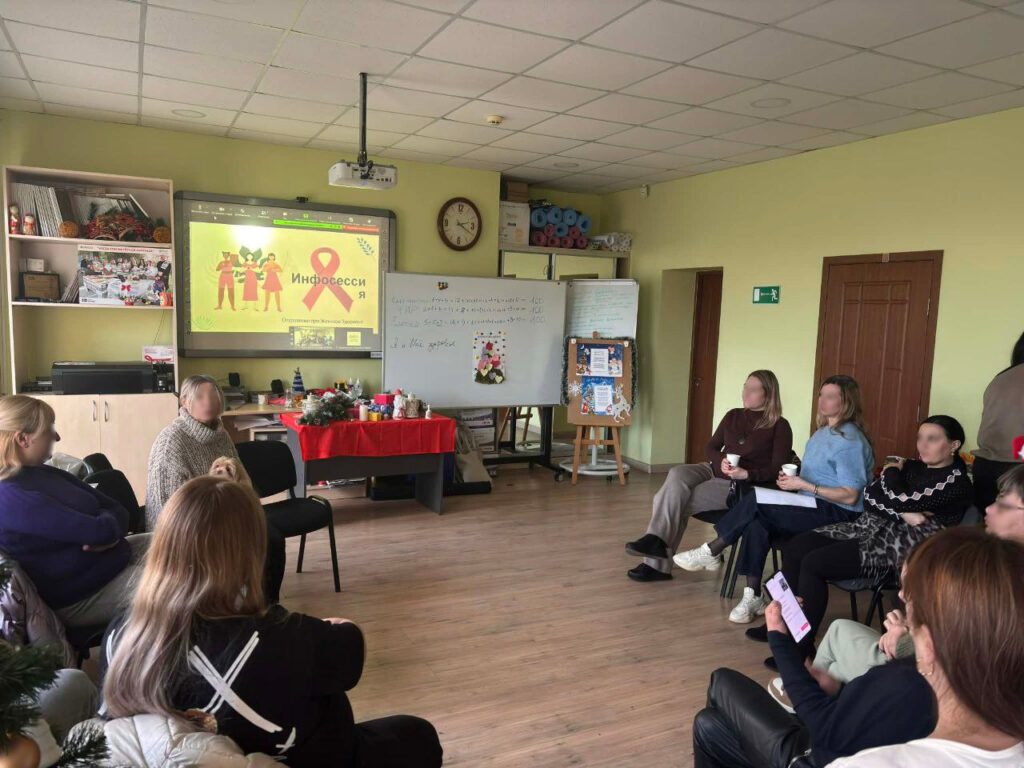
The initiative organised three online regional working meetings and nine in-country sessions, combining group education with tailored support for accessing services. Women living with HIV were referred to individual online consultations with sexual and reproductive health (SRH) specialists and guided to HIV-friendly health facilities for cervical and breast cancer screening and HPV vaccination. In some cases, NGO representatives accompanied women to clinics to remove logistical or psychological barriers. Practical resources were developed to support participants, including databases of HIV-friendly SRH providers and with algorithms for breast and cervical cancer prevention tailored specifically for women living with HIV. Coordination calls and EWNA meetings ensured consistent cross-country learning, enabling partners to share best practice, strengthen advocacy, and collectively address barriers to healthcare access.
Impact on women and communities
Over 100 women directly benefited from the project through group sessions, counselling, and facilitated access to screening. In Moldova 48 received individual consultations. In Uzbekistan, 27 women were accompanied to clinics by NGO representatives, with 17 completing cervical or breast cancer screening, including free access where proper referrals were in place. In Ukraine, 30 women received counselling, with 14 referred for screening. One participant in Moldova commented, “For the first time, I felt confident asking questions about screening and understanding what services are available for me.” Another in Uzbekistan said, “Being accompanied to the clinic made all the difference—I would not have gone alone.” These testimonials demonstrate the tangible benefits of community-led, women-driven support systems.
Cross-country collaboration as a catalyst
A core strength of the project was its networked approach. By connecting women, local NGOs, and healthcare providers across multiple countries, EWNA leads a platform for peer-led advocacy and collective problem-solving. This cross-country collaboration amplified the reach and impact of activities, strengthened regional networks of HIV-friendly providers, and enabled women living with HIV to take leadership in advocating for their health.
Long-term benefits
The initiative built sustainable capacity within women’s communities, enhancing their ability to advocate for sexual and reproductive health rights and access essential services. Networks of HIV-friendly healthcare providers and peer leaders established through the project will continue to support women across EECA, ensuring ongoing empowerment and improved health outcomes.
Support from The BEARR Trust
The Small Grants Scheme was crucial in enabling this work. During a period of severe funding cuts across the region, BEARR’s timely and flexible support allowed EWNA to maintain community engagement, provide practical support, and strengthen cross-country networks. However, ensuring consistent, long-term funding and adequate resources is essential to maintain routine activities that reach women with the least access to healthcare services. Sustained support, which women-led organisations like EWNA lack, would allow community-led initiatives to follow up regularly, provide ongoing accompaniment services, and address barriers that often prevent the most marginalized women from accessing cervical and breast cancer screening and other essential services. As one community leader reflected, “Consistent support makes it possible for us to stay connected with women who are otherwise invisible to the health system, ensuring their needs are addressed over time.” Through cross-country collaboration and women-led approaches, EWNA has shown that continuous, adequately resourced action is the most effective way to improve health outcomes and strengthen advocacy for women living with HIV across EECA.
Contact
Medea Khmelidze medeakhmelidze@gmail.com
Executive Director
Eurasian Women’s Network on AIDS (EWNA)
Tbilisi, Georgia


