Report: The BEARR Trust Annual Conference – November 14, 2025
Report by BEARR Trustee Sam Thorne
Solidarity and stamina: how civil society builds and sustains resilience
‘Resilience is choosing hope, action and compassion when circumstances push towards fear and exhaustion, keeping on with positivity inspired by belief and resources, staying alive and true to personal values, and having the opportunity to act accordingly.’
This was among the answers given to a question posed by Ross Gill, Chair of The BEARR Trust, at the beginning of the conference: ‘What does resilience mean?’ Six panellists – from Georgia, Kyrgyzstan, Ukraine and the UK – shared stories and insights that responded eloquently to that question and to this year’s conference theme of “Solidarity and stamina: how civil society builds and sustains resilience”.
The conference was a hybrid event, with thirty people joining in person at VAI Islington in London and another 32 people participating in the conference online. Two panel sessions and a plenary discussion were conducted simultaneously in English, Russian and Ukrainian.
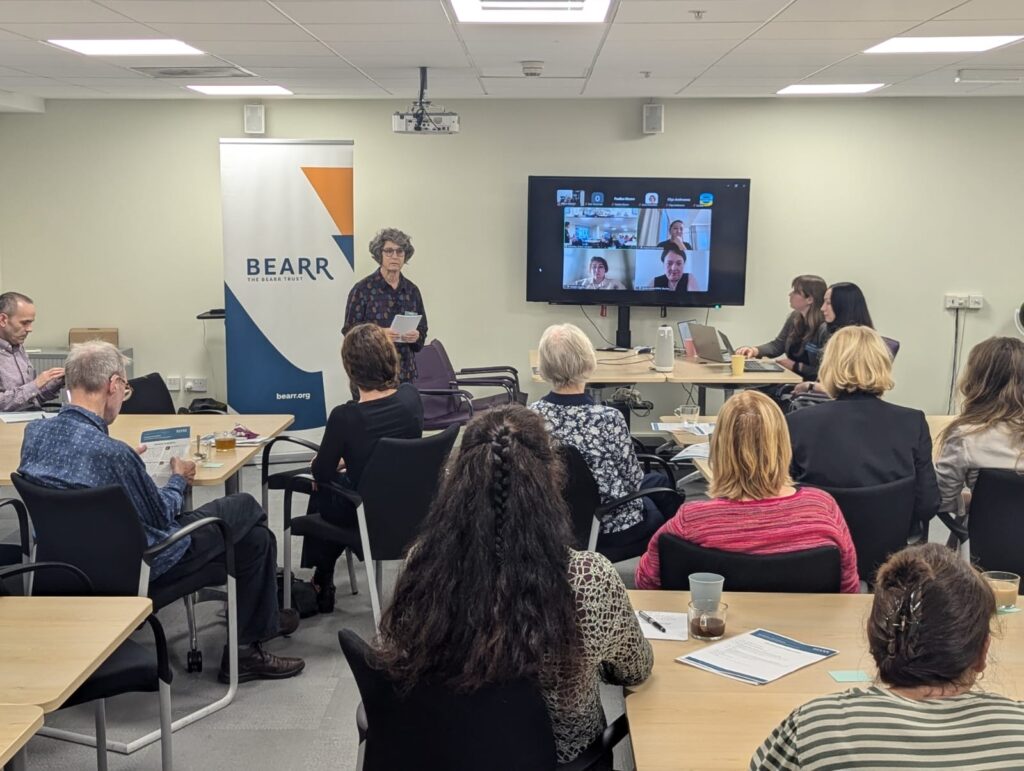
The first panel session featured Sergey Babin, Lana Chkadua and Leonora Meriel on the topic of ‘building resilience for individuals and communities’.
Sergey gave a moving presentation about the work of his International Bridge NGO to deliver art workshops to residents of Kharkiv living under constant Russian bombardment. He described how activities such as moulding plasticene and clay, puppet theatre and story-telling, can bring moments of ‘joy and safety’ at the darkest of times: a space where people can vent emotions and regain a sense of ‘control over life’. This in turn builds community cohesion and solidarity. ‘When people see their emotions are shared by others,’ said Sergey, ‘they develop mutual trust – and this goes a long way in communities.’
Lana also talked about the wider social benefits of helping individuals to restore their sense of agency. Her organisation, the Women Fund for Development, provides women in Abkhazia with skills and leadership training, psychological support and small-grant funding to set up self-help groups and start-up businesses. Once recovered, women often give back to their communities through voluntary work in thanks: for example, free English lessons for vulnerable children, and free haircuts and vegetables for old people. Personal resilience can thus develop into ‘collective’ resilience. Lana recounted how a women’s self-help group had succeeded, against all odds, in facing down an illegal developer that had planned to build over their village park. ‘We’ve learned that community resilience grows when people […] are not treated as victims or beneficiaries, but as agents of change,’ said Lana.
Leonora drew links between these stories and the work of Restart Foundation, which aims to ‘bring great mental health to Ukraine’ by providing mental health support to people in need and by contributing more broadly to the development of mental health services in Ukraine. Leonora talked about the Safe Space programme that they are running in kindergartens in Kyiv, giving psychological support to children suffering from the trauma of war and guidance to the parents and staff who look after them. ‘Almost everyone in Ukraine will need some kind of mental health support,’ said Leonora. ‘And the mental health of every individual is connected with all of those around them, and connected with the whole of society, so all the work we do with every single person is for the benefit of society and for the benefit of the future of Ukraine.’
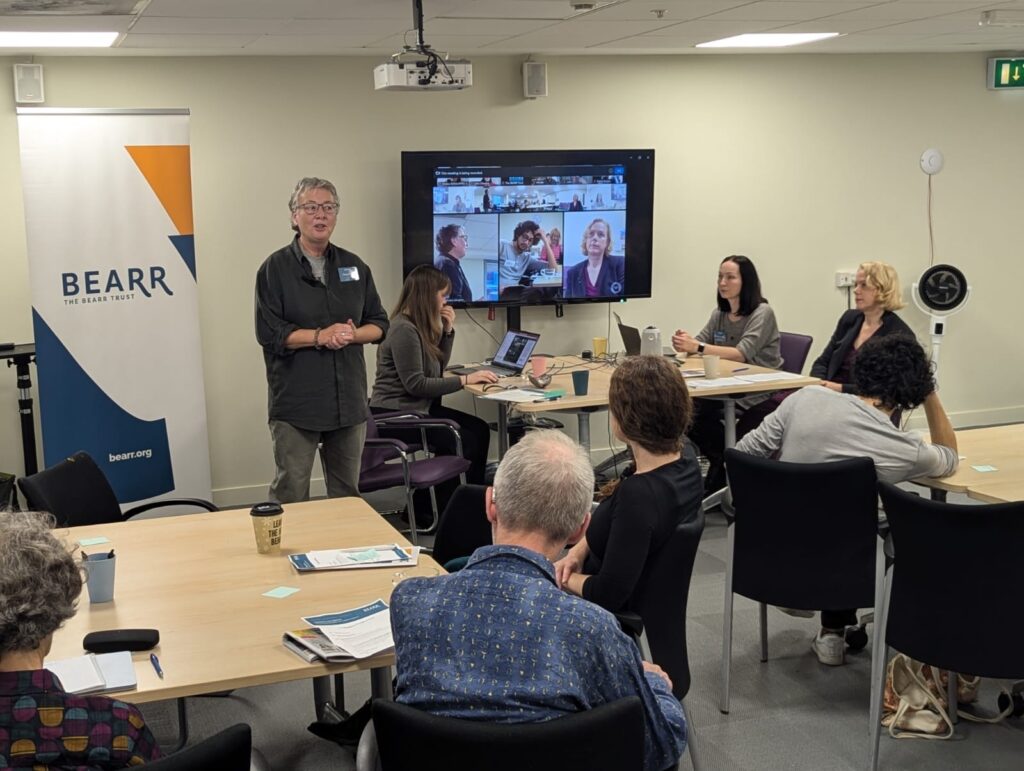
In the second panel session, Medea Khmelidze, Nataliia Muzyka and Meerim Osmonalieva spoke on the topic of ‘shaping the future with organisational strength and partnerships’.
Medea and Meerim discussed the pressures exerted on their organisations by authoritarian governments in Georgia and Kyrgyzstan respectively, and how they were responding. Both countries had recently passed Russian-style legislation clamping down on civil society, including laws to designate CSOs as ‘foreign agents’ if they receive revenues from abroad and new requirements to share the personal data of staff and beneficiaries.
Medea said that conditions in Georgia were very difficult. Her organisation, the Eurasian Women’s Network on AIDS, was having to be more selective in the projects they chose and to reduce their promotional and fundraising activities. Taking care to protect the data of their beneficiaries was particularly important. At the same time, they were trying to be resilient and treat problems as opportunities to improve and innovate, for example by networking more closely with other organisations in the same situation.
Meerim also emphasised the importance of collaborating with other NGOs. ‘Building allies […] is a kind of protection from power abuse,’ she said. For her organisation Oasis, it was still possible to work with some state agencies. Oasis has demonstrated value to the government by sharing data and research and contributing to policy development around child protection, women’s rights and other areas where they have expertise. Oasis has developed a nuanced approach to communicating with state agencies, not only criticising them where appropriate but also trying to influence them through data- and evidence-led advocacy. Meerim emphasised that the ability of NGOs to work with authoritarian governments varies from country to country. With some authoritarian governments, it was impossible to build relationships, particularly for NGOs working in areas towards which those governments are ‘antagonistic and apprehensive’, such as freedom of speech and minorities’ rights. In other cases, some cooperation is possible and can lead to positive outcomes, as Oasis has shown.
Nataliia described a different set of challenges facing the Association of Mothers and Wives of Ukraine’s Defenders, which has been working since 2014 to provide psychological, legal humanitarian and administrative help to women with family members who have died, are missing or are currently on active military service. Nataliia described their main challenges as ‘emotional burnout’ and ‘the need to build resilience, literally, on ruins’. Forming international partnerships has been vital to their work, giving them an international voice, protection of rights and access to expertise. In return, they can offer international partners honest and transparent testimony about supporting military families through war. ‘Through cooperation with our partners,’ Nataliia said, ‘we receive not just support, we build stability, bring our expertise, gain and give hope for a better and peaceful time for Ukrainians.’
In the plenary session, Ross summarised key themes from the panels and shared the responses of conference participants to his earlier question about what resilience means. Ross noted that several points made by the panellists – such as the importance of taking small steps; supporting individuals and small organisations to grow; and developing local leadership – chimed with BEARR’s own beliefs and approaches.
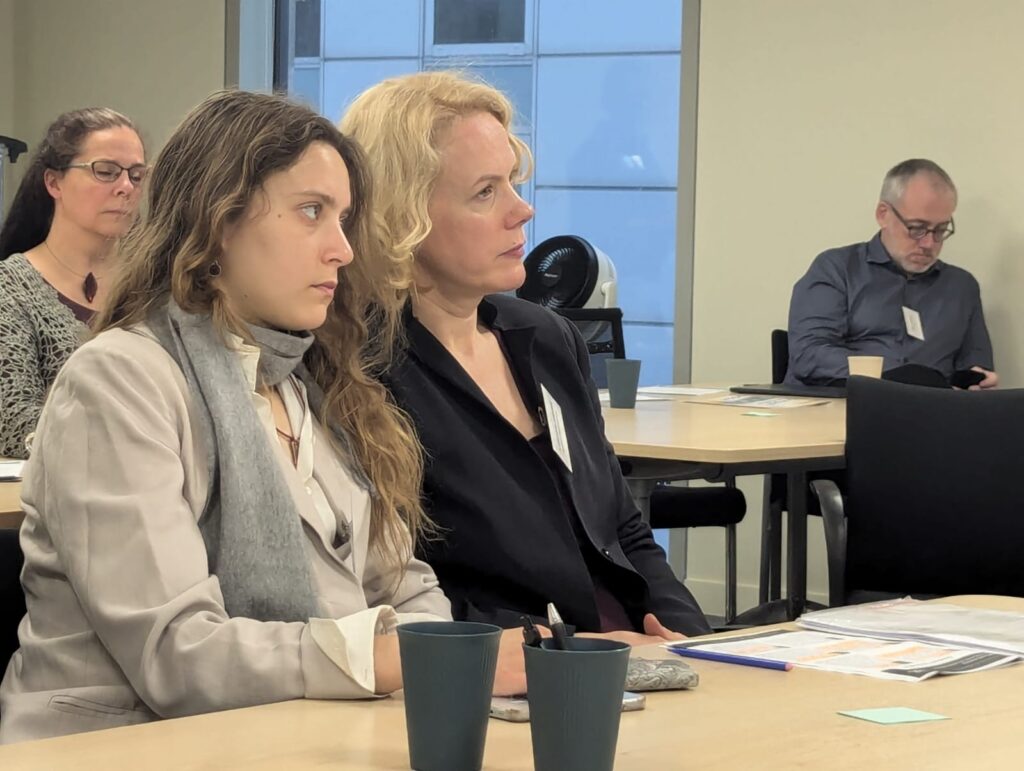
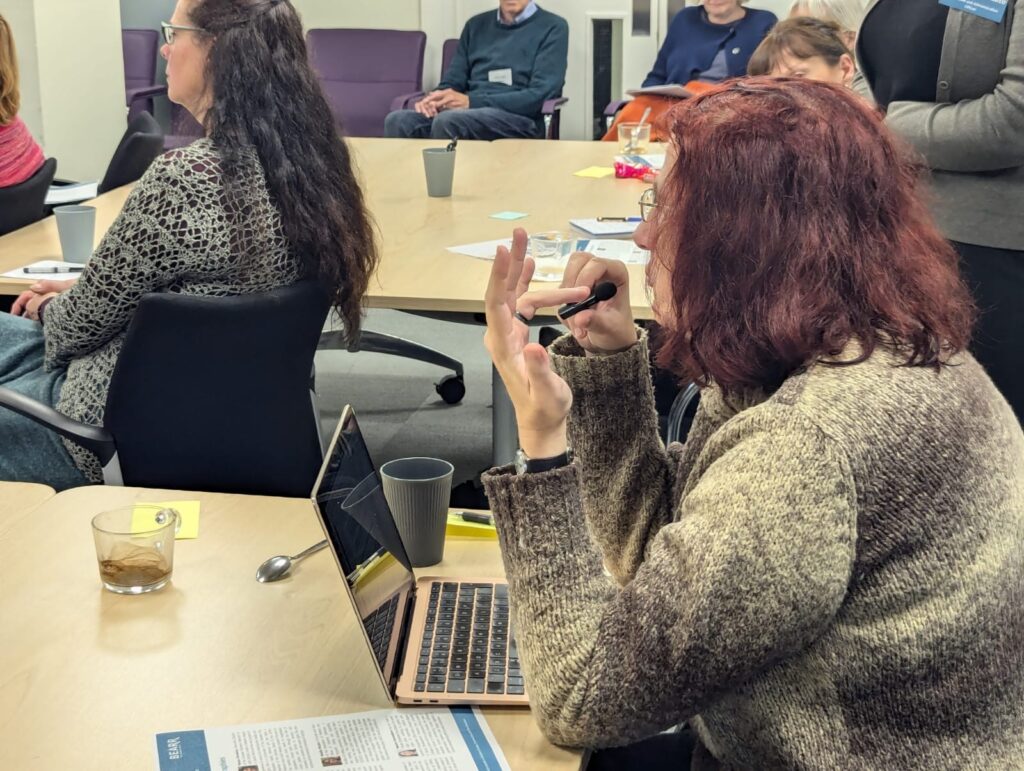
On behalf of the BEARR Trustees, Ross thanked the panellists, panel chairs and attendees for their participation in the conference, along with BEARR’s interpreters, Alexander Stetsenko and Lisa Snegireva, and translator Oksana Yurchenko. Particular thanks were expressed to BEARR Trustee Marcia Levy and BEARR Information and Administration Officer Valdone Sniukaite for their great work in organising the conference.
Thank you also to our supporters, whose donations make the conference possible each year. Our partners are deeply appreciative of your moral support and the opportunity you give them to share their experiences and lessons learned on an international stage. Donations can be made to BEARR and our partner organisations via our Donate page here.
For more on the conference, follow this link for an appendix to this report, which provides more detail on the two panel sessions, Q&A discussions and plenary session. An edited video of the conference is also available on our YouTube channel here.


